


2026 Honda HR-V near Commack, NY
The 2026 Honda HR-V introduces a series of targeted updates that focus on usability, system integration, and mechanical consistency. This model continues to operate as a subcompact crossover with a structured approach to performance, interior functionality, and safety systems. The latest iteration incorporates revised styling elements, expanded standard technology, and retained mechanical architecture that emphasizes predictable operation and balanced efficiency. The vehicle is available in three trims, each configured to deliver consistent foundational capabilities with incremental enhancements in materials and integrated features.
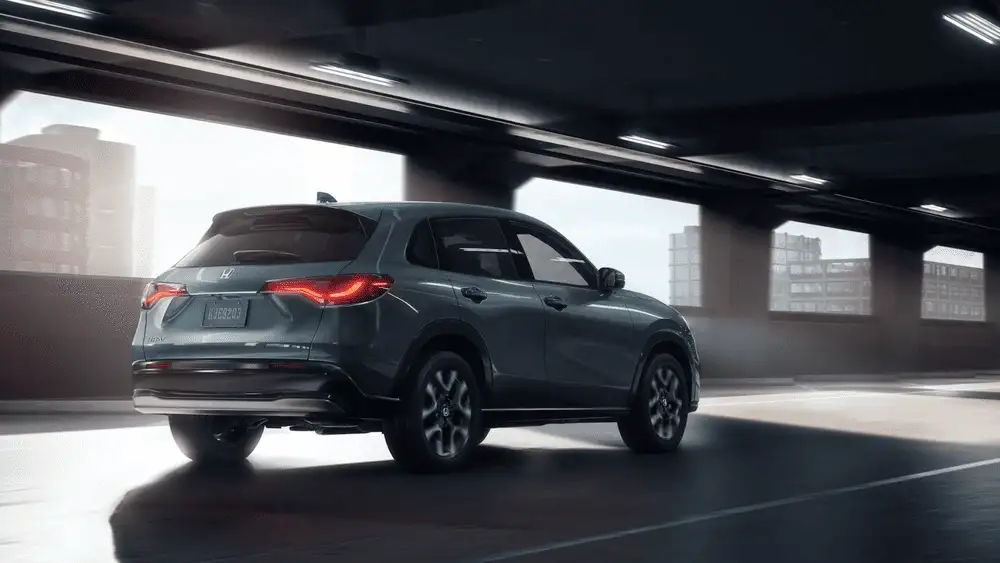
Powertrain Configuration and Mechanical Performance
The 2026 Honda HR-V operates with a 2.0-liter inline four-cylinder engine designed to deliver steady output and consistent acceleration. The engine is calibrated to provide smooth throttle response across varying driving conditions, supporting both urban and highway operation without abrupt transitions. This powertrain configuration prioritizes reliability and efficiency while maintaining sufficient responsiveness for merging and passing maneuvers.
The drivetrain supports both front-wheel drive and an available all-wheel drive system. The all-wheel-drive configuration uses Intelligent Control to automatically adjust torque distribution between the front and rear wheels. This adjustment occurs in response to traction conditions, improving vehicle stability on uneven or low-grip surfaces. The system operates without driver input and contributes to controlled handling during rain, snow, or loose terrain conditions.
The 2026 Honda HR-V includes three selectable driving modes that influence system behavior. Normal mode maintains balanced operation for standard driving conditions. Eco mode adjusts throttle mapping to improve fuel efficiency by reducing engine output sensitivity. Snow mode modifies traction control parameters to limit wheel slip and maintain directional control in low-traction environments.
A fully independent rear suspension supports ride quality and handling precision. This suspension system allows each rear wheel to respond independently to road irregularities, reducing the transfer of impact forces into the cabin. The result is improved stability during cornering and enhanced comfort over uneven surfaces. Hill Descent Control is also integrated, enabling controlled vehicle speed when descending steep grades without continuous brake input.
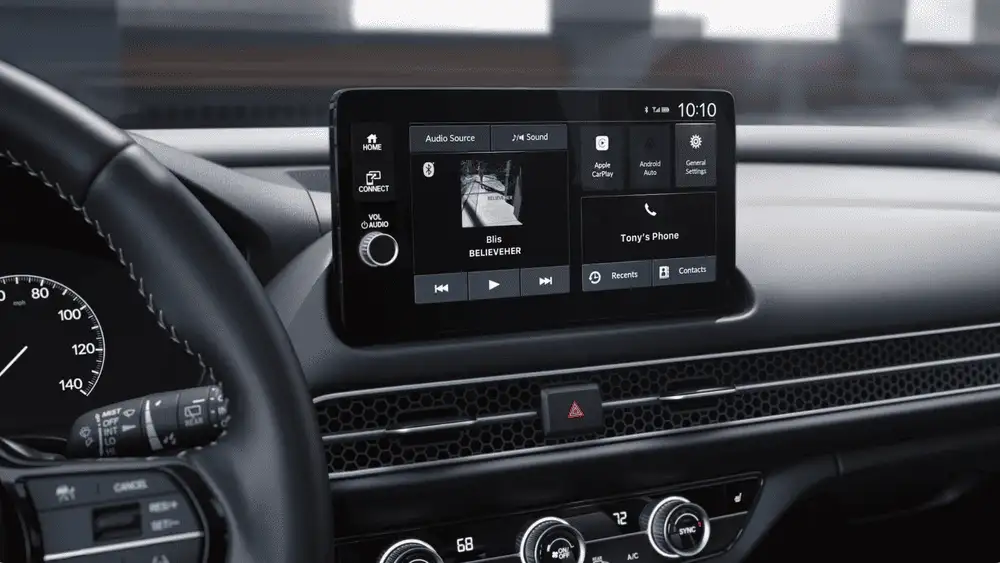
Infotainment System and Connectivity Features
The 2026 Honda HR-V introduces a revised infotainment system centered around a standard 9-inch high-definition touchscreen. This display replaces the previous configuration and includes a faster processing unit, resulting in improved response times and reduced input delay. The interface is designed for clarity and ease of navigation, with simplified menu structures that allow for efficient access to system functions.
Wireless smartphone integration is standard, supporting both Apple CarPlay® and Android Auto™ compatibility. This functionality enables users to connect their devices without physical cables, allowing access to navigation, communication, and media applications directly through the vehicle’s display system.
A wireless phone charging pad is also included as standard equipment. This feature reduces the need for additional charging accessories and supports continuous device operation during travel. The system is positioned for accessibility while maintaining a secure placement to prevent movement during driving.
The digital instrumentation display measures 7 inches and provides essential driving data, including speed, fuel efficiency, and system alerts. The display is configured to present information in a clear and organized format, reducing driver distraction while maintaining visibility of critical data.
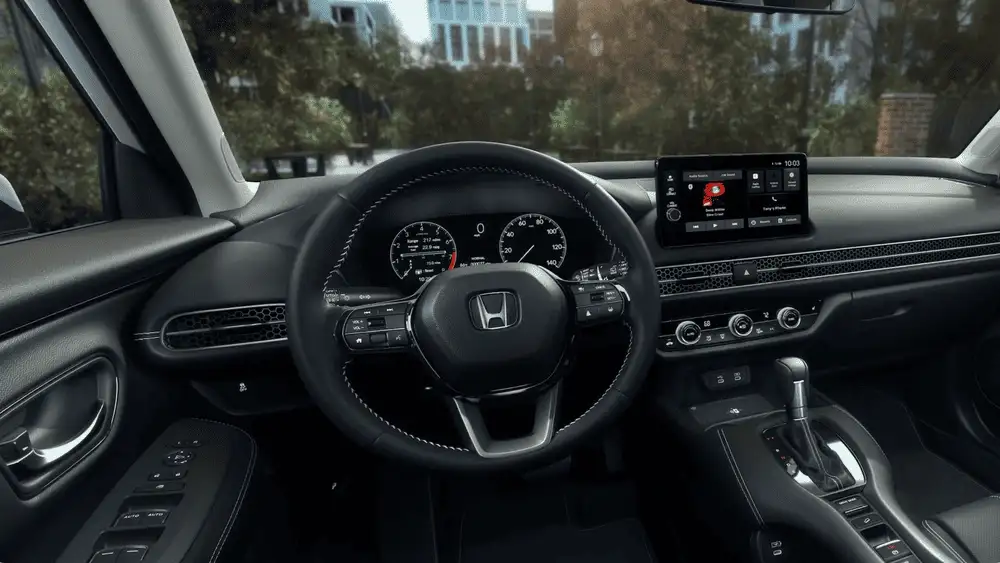
Interior Configuration and Functional Layout
The interior of the 2026 Honda HR-V is configured with an emphasis on accessibility, control placement, and occupant usability. The cabin layout positions primary controls within direct reach of the driver, minimizing the need for extended movement during operation. The design supports intuitive interaction with climate, audio, and vehicle settings.
Material updates are present in higher trims, with the EX-L configuration incorporating silver steering wheel spokes that improve visual contrast and control identification. The climate control system includes dynamic knob lighting that changes color based on temperature settings. This visual feedback allows for immediate recognition of system adjustments without requiring extended focus.
Front footwell lighting is integrated into the EX-L trim, providing additional visibility in low-light conditions. This feature improves entry and exit convenience while maintaining a consistent interior lighting scheme.
USB-C ports are distributed throughout the cabin, supporting device charging for both front and rear occupants. The placement of these ports is designed to reduce cable interference and maintain a clean interior layout. Seating and cargo configurations continue to support a balance between passenger space and storage capacity, allowing the vehicle to accommodate varying usage scenarios.
Structural Design and Exterior Enhancements
The 2026 Honda HR-V incorporates updated exterior elements that refine its overall design without altering its structural framework. Each trim level includes distinct wheel configurations that contribute to both visual differentiation and functional performance. The LX trim is equipped with 17-inch alloy wheels finished in Pewter Gray. The Sport trim features 18-inch Berlina Black alloy wheels with a revised design. The EX-L trim includes larger machine-finished 18-inch wheels that enhance road contact and visual proportion.
Two new exterior color options are introduced, expanding the available palette. Solar Reflection Metallic is offered on select trims, while Boost Blue Pearl is exclusive to the Sport configuration. These additions provide further variation in appearance without altering the vehicle’s structural integrity.
Privacy rear glass is now standard across all trims. This feature reduces interior heat accumulation and limits visibility into the rear cabin area. The Sport trim includes gloss black tailgate badging, contributing to a distinct exterior identity within the lineup.
The vehicle structure is built on Honda’s Advanced Compatibility Engineering body framework. This design distributes collision energy across a wider area of the structure, reducing the concentration of force during impact. The structural layout is engineered to improve compatibility with vehicles of varying sizes, supporting more controlled energy transfer during multi-vehicle collisions.
Safety Systems and Driver Assistance Technologies
The 2026 Honda HR-V integrates a comprehensive set of safety systems designed to support both collision prevention and occupant protection. The Honda Sensing® suite is included as standard equipment and incorporates multiple driver-assistive technologies that monitor vehicle surroundings and assist in maintaining safe operation.
The airbag system has been updated with next-generation front airbags designed to reduce rotational movement of the head during a collision. This design improves occupant protection by controlling head motion and reducing the potential for injury. Additional airbags include front occupant knee airbags and rear passenger side-impact airbags, extending protection coverage throughout the cabin.
The structural safety system is reinforced by the Advanced Compatibility Engineering body design. This structure enhances crash energy management by distributing impact forces more evenly, reducing localized stress on the cabin. The integration of active and passive safety systems creates a layered approach to occupant protection.
Hill Descent Control contributes to safety during steep descents by maintaining a controlled vehicle speed without requiring continuous brake application. This feature is particularly relevant in low-traction conditions, where manual braking could lead to wheel lock or loss of control.
Integrated Technology and Cabin Interface Improvements
The system architecture is designed to reduce complexity while maintaining functionality. Controls are arranged to minimize distraction, and visual feedback systems support quick interpretation of vehicle status.
Climate control adjustments are enhanced through illuminated interface elements, allowing users to identify temperature changes through color variation. This integration reduces the need to divert attention from the road. The infotainment system operates with reduced latency, supporting faster transitions between applications and improved overall usability.
The wireless charging system and distributed USB-C ports ensure that device connectivity is maintained without reliance on multiple adapters. These features are integrated into the cabin layout to maintain accessibility without disrupting the overall design.
Schedule a Test Ride Today
Drivers seeking a structured evaluation of the 2026 Honda HR-V can examine its engineering and integrated systems at Huntington Honda near Commack, NY. A test drive provides an opportunity to assess the 2.0-liter engine response, suspension behavior, and drive mode functionality under controlled conditions. The infotainment system, including the 9-inch touchscreen and wireless connectivity features, can be reviewed for interface responsiveness and usability. Scheduling a visit allows for direct interaction with the vehicle’s safety technologies, including the Honda Sensing® suite and airbag system design. This process enables a comprehensive understanding of how the 2026 Honda HR-V integrates mechanical performance, safety systems, and technology within a single platform. Contact our team today!