


2026 Honda CR-V near Smithtown, NY
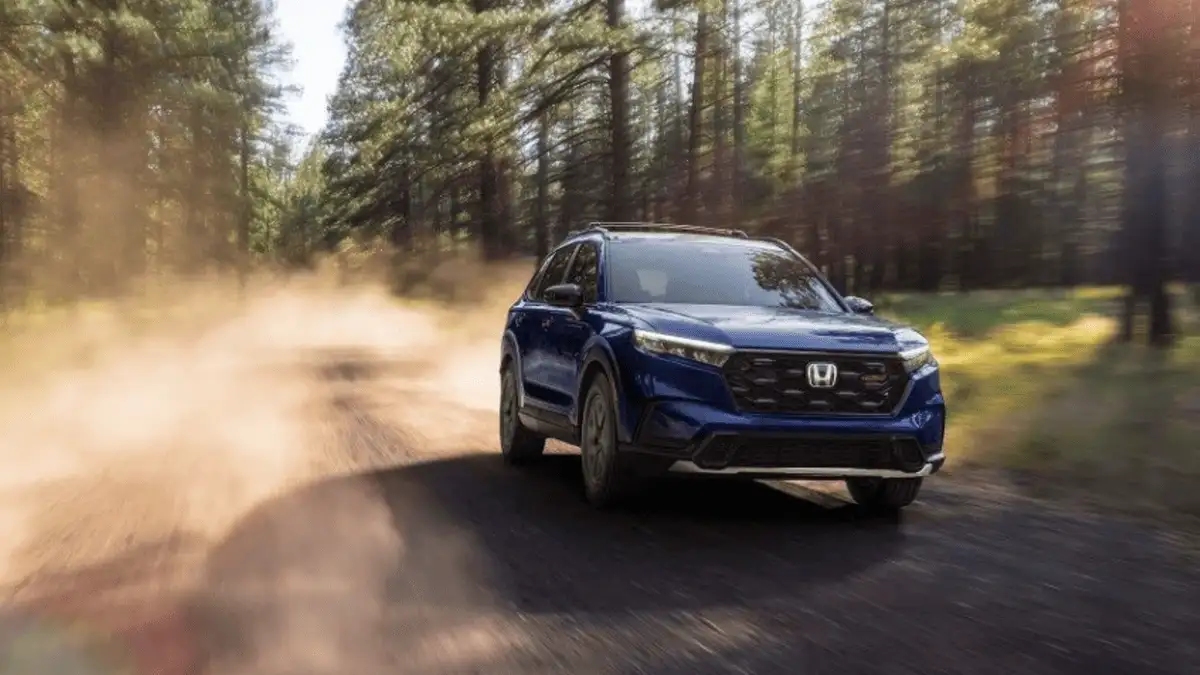
The 2026 Honda CR-V is engineered as a compact SUV platform focused on mechanical efficiency, structural balance, and system integration across powertrain, chassis, safety, and connectivity domains. The model lineup includes both turbocharged gasoline and hybrid-electric configurations, allowing for distinct performance and efficiency profiles within the same vehicle architecture. Every configuration emphasizes standardized engineering practices such as direct fuel injection, advanced suspension geometry, and integrated driver-assist systems. From a technical standpoint, the 2026 Honda CR-V is designed to deliver predictable performance, controlled handling, and consistent operational efficiency across urban, highway, and variable surface conditions.
Turbocharged Gasoline Powertrain Architecture
Gasoline-powered trims of the 2026 Honda CR-V utilize a 1.5-liter in-line four-cylinder engine equipped with a turbocharger and a 16-valve DOHC VTEC valvetrain. This power unit produces 190 horsepower at 6,000 rpm and delivers 179 lb.-ft. of torque across a broad operating range from 1,700 to 5,000 rpm. The extended torque band supports steady acceleration without abrupt power delivery, which contributes to drivability consistency during lane changes and highway merging.
Fuel delivery is managed through direct fuel injection, supporting improved combustion efficiency and reduced emissions output. Idle-stop functionality is included on select trims to minimize fuel consumption during stationary operation. The gasoline engine is paired with a continuously variable transmission engineered with a wide ratio range, supporting smooth power transfer while reducing mechanical complexity. Final drive ratios are calibrated to balance acceleration with highway fuel economy, supporting sustained cruising efficiency without excessive engine load.
Hybrid Powertrain System and Electric Drive Integration
Hybrid variants of the 2026 Honda CR-V employ a two-motor hybrid system paired with a 2.0-liter Atkinson-cycle in-line four-cylinder engine. The gasoline engine generates 145 horsepower at 6,100 rpm and operates with a high compression ratio of 13.9, supporting improved thermal efficiency. The electric motor contributes 181 horsepower and produces 247 lb.-ft. of torque available immediately from zero rpm. Combined system output reaches 204 total horsepower, with propulsion managed through a direct-drive configuration rather than a traditional stepped transmission.
This hybrid system prioritizes electric propulsion at lower speeds and transitions to engine lock-up at higher speeds to reduce conversion losses. Regenerative braking captures kinetic energy during deceleration and stores it within the hybrid battery system. Deceleration selectors allow drivers to adjust energy recovery behavior, contributing to controlled braking response and enhanced energy efficiency during stop-and-go operation. The hybrid architecture is designed to minimize drivetrain friction while maintaining consistent throttle response across driving scenarios.
Drivetrain Configurations and Traction Management
The 2026 Honda CR-V is available in both front-wheel drive and all-wheel drive configurations. Front-wheel drive setups emphasize reduced mass and optimized fuel economy. All-wheel drive models are equipped with the Real-Time AWD with Intelligent Control System, which distributes torque between axles based on traction demands. This system enhances grip during low-traction conditions such as snow or wet pavement while maintaining efficiency during steady-state driving.
Steering input and wheel speed data are continuously monitored to adjust torque distribution. This approach improves directional stability without requiring manual driver intervention. Hybrid and gasoline trims both offer all-wheel drive availability, allowing consistent traction management across powertrain types. The drivetrain architecture supports predictable vehicle behavior during cornering and surface transitions.
Fuel Economy Ratings and Emissions Compliance
Fuel efficiency varies by powertrain and drivetrain configuration. Gasoline-powered front-wheel drive models achieve EPA ratings of 28 mpg city, 33 mpg highway, and 30 mpg combined. All-wheel drive gasoline variants deliver ratings of 27 mpg city, 31 mpg highway, and 29 mpg combined. Hybrid front-wheel-drive trims achieve ratings of 43 mpg city, 36 mpg highway, and 40 mpg combined. All-wheel drive hybrid models range between 35 and 37 mpg combined depending on trim level.
All 2026 Honda CR-V configurations meet CARB emissions standards, including LEV4 SULEV classifications for gasoline and hybrid systems. These standards are supported by precise fuel metering, combustion efficiency tuning, and emissions aftertreatment systems. The recommended fuel is unleaded gasoline with a suggested octane rating of 91 for optimal performance.
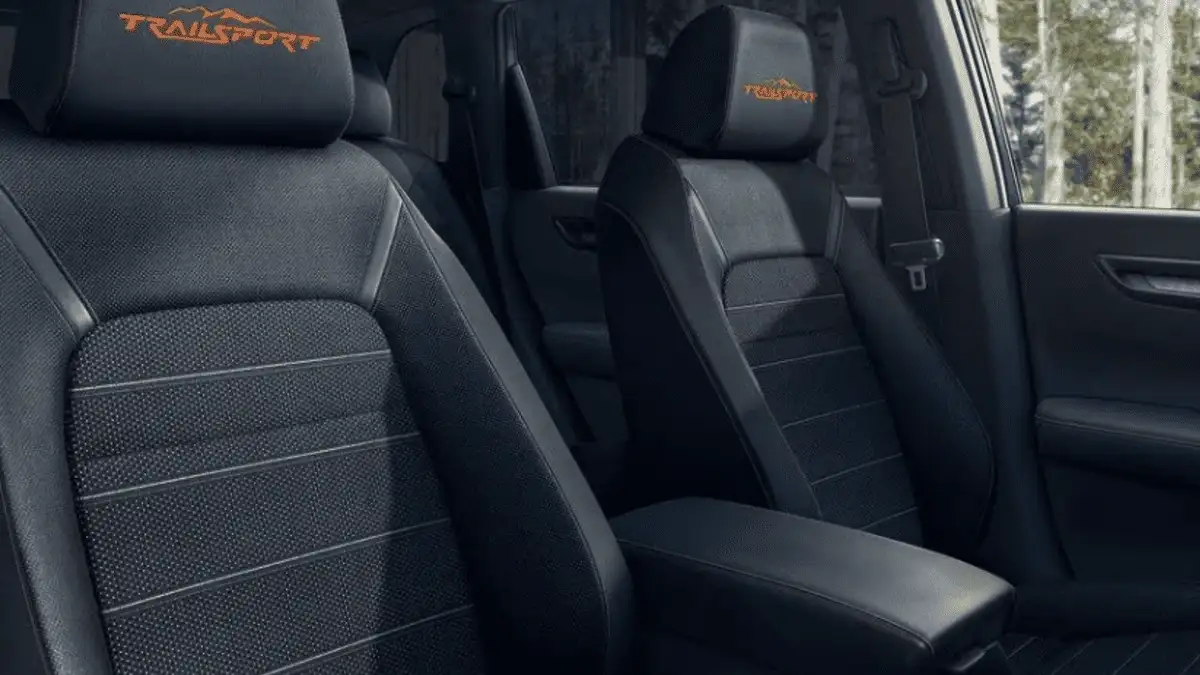
Disclaimer: 28 city/33 highway/30 combined mpg rating for 2WD LX, EX & EX-L trims. 27 city/31 highway/29 combined mpg rating for AWD LX, EX & EX-L trims. 43 city/36 highway/40 combined mpg rating for the 2WD Sport & Sport-L Hybrid trims. 40 city/34 highway/37 combined mpg rating for AWD Sport, Sport-L & Sport Touring Hybrid trims. 38 city/33 highway/35 combined mpg rating for TrailSport Hybrid AWD trim. Based on 2026 EPA mileage ratings. Use for comparison purposes only. Your mileage will vary depending on how you drive and maintain your vehicle, driving conditions, battery-pack age/condition (hybrid trims) and other factors.
Suspension Design and Chassis Control
The chassis of the 2026 Honda CR-V incorporates a MacPherson® strut front suspension paired with a multi-link rear suspension. This configuration supports ride comfort while maintaining consistent tire contact during cornering. Stabilizer bars are tuned differently based on drivetrain configuration, with specific dimensions for front-wheel drive and all-wheel drive models to balance roll control and compliance.
Agile Handling Assist is standard across all trims and applies targeted brake force to individual wheels during cornering. This system supports controlled yaw response and enhances steering accuracy. Electric power steering utilizes a dual-pinion assist design, delivering linear response across a steering ratio of approximately 12.3 to 12.4 depending on drivetrain. Lock-to-lock steering input measures 2.4 turns, supporting maneuverability in confined environments.
Braking Systems and Wheel Configurations
Braking hardware includes ventilated front disc brakes and solid rear disc brakes, with front rotor diameters up to 12.6 inches depending on trim. Brake system calibration prioritizes consistent pedal feel and fade resistance during extended operation. Anti-lock braking and brake-force distribution systems are standard.
Wheel sizes range from 17-inch steel wheels with covers to 19-inch alloy wheels. Tire specifications vary by trim, including all-season and all-terrain options for TrailSport configurations. A compact spare tire or tire repair kit is included depending on trim selection.
Exterior Dimensions and Structural Proportions
The 2026 Honda CR-V measures 184.8 inches in overall length, with a width of 73.5 inches and a wheelbase of 106.3 inches. Height varies slightly between front-wheel drive and all-wheel drive models, ranging from 66.2 to 66.5 inches. Ground clearance reaches up to 8.2 inches on all-wheel drive trims, supporting light off-road use and improved obstacle clearance.
Approach and departure angles vary by configuration, with all-wheel drive models offering improved geometry compared to front-wheel drive versions. These dimensions support stable handling while maintaining practical interior volume.
Interior Space Utilization and Cargo Capacity
Passenger volume ranges from 103.5 to 106 cubic feet depending on trim. Front-row headroom measures up to 40.0 inches, while rear headroom reaches 38.2 inches. Legroom extends to 41.3 inches in the front row and 41.0 inches in the second row. Shoulder and hip room dimensions are engineered to support adult occupants across both seating rows.
Cargo capacity behind the second row measures up to 39.3 cubic feet in gasoline models and 36.3 cubic feet in hybrid trims. With the rear seats folded, maximum cargo volume expands to as much as 76.5 cubic feet depending on configuration. The load floor design supports flat cargo placement and efficient space utilization.
Infotainment Systems and Digital Interfaces
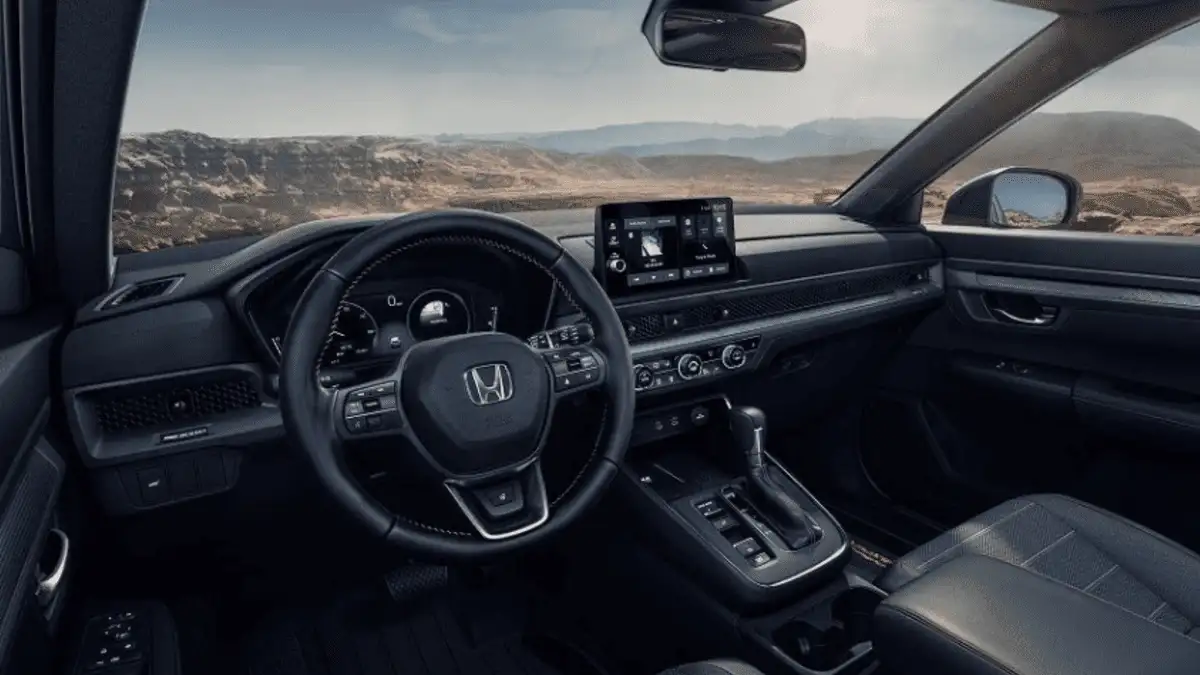
Every 2026 Honda CR-V includes a 9-inch color touchscreen supporting wireless Apple CarPlay® and Android Auto™ compatibility. Instrumentation varies by trim, with either a 7-inch or 10.2-inch TFT digital meter display. Higher trims include Google built-in functionality with integrated navigation, voice commands, and in-vehicle applications supported by a dedicated data plan.
Audio output ranges from a 160-watt four-speaker system to a 320-watt eight-speaker system, with a 12-speaker Bose® premium audio system available on top trims. USB-C ports are positioned in both front and rear seating areas, supporting device charging and data transfer. Wireless charging is included on applicable trims, supporting Qi-compatible devices.
Comprehensive Driver Assistance and Safety Systems
Honda Sensing® is standard across the entire 2026 Honda CR-V lineup. This system includes Collision Mitigation Braking System, Road Departure Mitigation, Lane Keeping Assist System, Adaptive Cruise Control with Low-Speed Follow, Lane Departure Warning, Forward Collision Warning, and Traffic Sign Recognition. These systems operate using camera and sensor inputs to support driver awareness and hazard response.
Additional safety equipment includes blind spot information systems, cross traffic monitoring, traffic jam assist, parking sensors on select trims, and a multi-angle rearview camera with dynamic guidelines. Structural safety is supported by the Advanced Compatibility Engineering body design, multiple airbag systems, electronic stability control, and tire pressure monitoring.
Visit Huntington Honda for a Test Ride
To evaluate how these technical systems operate together in daily driving conditions, a test drive provides direct exposure to the vehicle’s power delivery, chassis response, and driver-assist functionality. Experiencing acceleration behavior, steering precision, and braking response allows for an accurate assessment of engineering balance. The interaction between infotainment systems and digital instrumentation is also best understood through hands-on use. A scheduled visit offers the opportunity to review trim-specific configurations in detail and compare powertrain options. Huntington Honda near Smithtown, NY, offers access to the 2026 Honda CR-V for those seeking to examine its specifications through direct operation.