


2026 Honda CR-V e:FCEV near Commack, NY
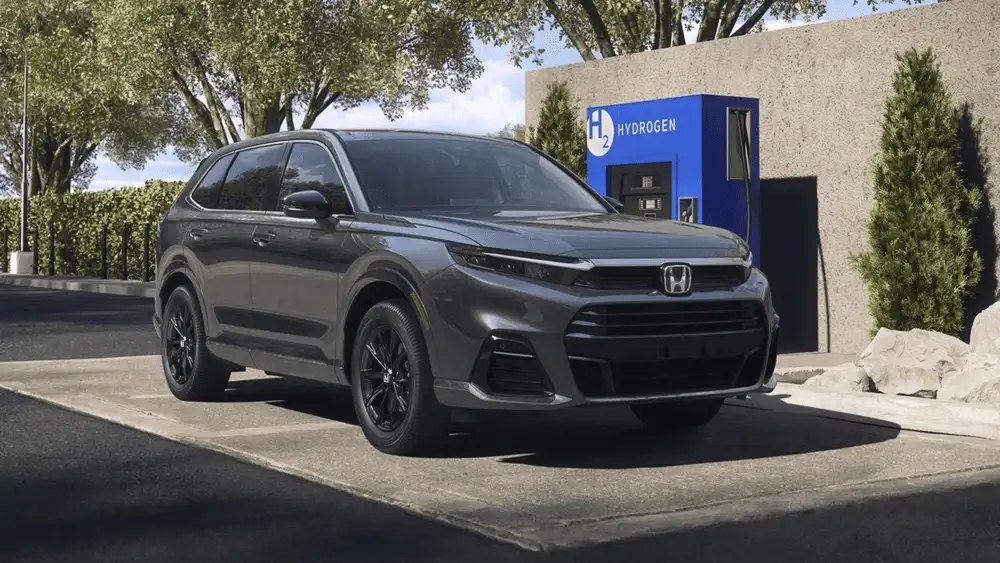
The 2026 Honda CR-V e:FCEV combines hydrogen fuel-cell technology with plug-in electric capability in a compact SUV platform. The model uses a Proton Exchange Membrane Fuel Cell system paired with a lithium-ion battery and an AC synchronous permanent-magnet electric motor. This configuration allows the vehicle to operate using both hydrogen fuel and stored battery energy while maintaining zero-emission operation. Honda engineered the 2026 Honda CR-V e:FCEV with a focus on efficiency, packaging, daily usability, and long-distance capability.
The fuel-cell module produces 92.2 kW of output and operates within a temperature range of -22 to 212 degrees Fahrenheit. The electric motor generates 174 horsepower and 229 lb-ft of torque. Power is routed through a fixed, single-speed direct-drive transmission with Sport Mode and shift-by-wire functionality. The drivetrain uses front-wheel drive and includes an overall ratio of 10.255, a primary gear ratio of 2.95, and a final drive ratio of 3.476.
Honda equips the 2026 Honda CR-V e:FCEV with a 17.7-kWh lithium-ion battery operating at 347.5 volts. The battery supports EV Mode and provides an electric driving range of 29 miles. Total driving range reaches 270 miles. The hydrogen storage system uses compressed hydrogen gas with a tank pressure rating of 10,000 psi and a fuel capacity of 4.3 kilograms. MPGe ratings measure 61 city, 52 highway, and 57 combined.
Fuel-Cell Engineering and Electric Motor Output
The fuel-cell system in the 2026 Honda CR-V e:FCEV functions as the primary source of electrical generation while driving. Hydrogen stored in the onboard tank passes through the Proton Exchange Membrane Fuel Cell system to generate electricity. This electricity powers the electric motor and charges the battery when necessary.
The electric motor delivers immediate torque response due to its direct-drive configuration. The 229 lb-ft torque output supports strong low-speed acceleration and steady highway performance. The single-speed transmission removes conventional gear shifting, allowing smoother power delivery during acceleration and deceleration. Honda also integrates deceleration selectors to allow controlled regenerative braking adjustment.
The vehicle includes four dynamic drive modes consisting of Snow, Econ, Normal, and Sport. These settings modify accelerator response and overall vehicle behavior depending on driving conditions. EV Mode allows operation using battery energy under suitable conditions before transitioning to hydrogen-generated power.
Interior Technology and Driver Information Systems
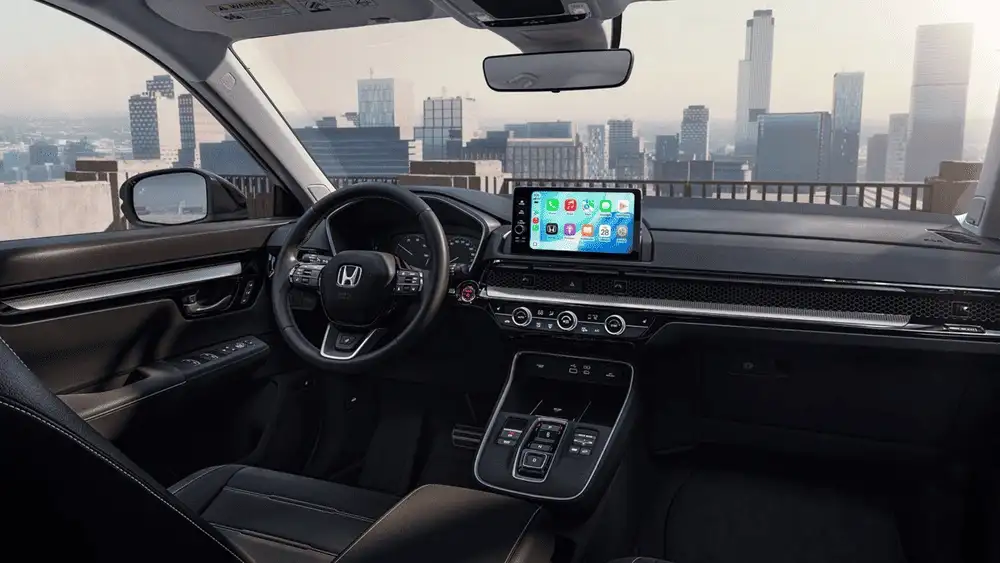
Honda equips the 2026 Honda CR-V e:FCEV with a 10.2-inch digital instrument cluster and a 9-inch color touchscreen display. The infotainment system integrates Honda Satellite-Linked Navigation with voice recognition and Honda HD Digital Traffic capability.
Wireless Apple CarPlay® and wireless Android Auto™ compatibility are included for smartphone integration. Bluetooth® streaming audio, Wi-Fi hotspot capability, HondaLink®, and HondaLink® subscription services are also standard.
The audio system uses a Bose® Premium Sound System with 12 speakers. Additional entertainment features include SiriusXM® compatibility and HD Radio™. Active Noise Cancellation™ technology assists with cabin sound reduction during driving.
Charging and connectivity functions include one USB-A 2.5A smartphone and audio interface in the front area, one front USB-C 3.0A charging port, and two rear USB-C 3.0A charging ports. The vehicle also includes a Qi-compatible wireless charging pad.
A 120V and 1,500-watt AC external power supply adds external utility functionality. This system allows compatible electronic equipment to draw power directly from the vehicle.
Suspension Configuration and Chassis Structure
The 2026 Honda CR-V e:FCEV uses Honda’s Advanced Compatibility Engineering™ body structure. The platform integrates aluminum front and rear subframes to reduce weight while supporting chassis rigidity. Suspension components include a MacPherson® strut front suspension and a multi-link rear suspension system.
Amplitude reactive dampers assist with ride quality and suspension control. Agile Handling Assist contributes additional braking support during cornering to improve directional stability. Electric Power Steering provides a steering ratio of 12.3 with 2.4 turns lock-to-lock. The turning diameter measures 37.1 feet curb-to-curb.
Brake hardware includes ventilated 13-inch front disc brakes and 13-inch solid rear disc brakes. The braking system also includes an electro-servo brake system, an electronic parking brake, and an automatic brake hold function. Hill Start Assist and Hill Descent Control contribute additional low-speed vehicle management during incline operation.
The 2026 Honda CR-V e:FCEV rides on 18-inch by 7.5-inch Berlina Black wheels fitted with 235/60R18 103H Mud and Snow tires. Stabilizer bars measure 26.0 mm in the front and 17.7 mm in the rear. Honda also equips the vehicle with a tire repair kit in place of a conventional spare tire.
Exterior Dimensions and Structural Packaging
The 2026 Honda CR-V e:FCEV measures 187.6 inches in length, 73.5 inches in width, and 66.6 inches in height. The wheelbase extends 106.3 inches. Front and rear track measurements are 63.4 inches and 64 inches, respectively. Ground clearance measures 6.7 inches in unladen form.
The exterior proportions support passenger accommodation, battery placement, fuel-cell packaging, and hydrogen storage integration. Approach and departure angles measure 15.5 degrees and 20.3 degrees. Honda balances aerodynamic efficiency with cargo and cabin space through the compact SUV body structure.
Exterior equipment includes LED headlights and LED taillights, along with LED daytime running lights and LED front turn indicators. The side mirrors include integrated LED turn indicators and heating functionality. Additional exterior components include rain-sensing wipers, acoustic laminate windshield glass, acoustic front side glass, gloss black power side mirrors, privacy glass, and a hands-free power tailgate.
Auto on and off headlight functionality is standard. Rear turn indicators use halogen lighting. Exterior color options include Meteorite Gray Metallic and Platinum White Pearl paired with black trim.
Cabin Measurements and Cargo Flexibility
Interior passenger volume measures 106.4 cubic feet. Front-row headroom reaches 40.0 inches while second-row headroom measures 38.2 inches. Front-row legroom measures 41.4 inches, and rear legroom measures 41.1 inches.
Shoulder room measures 57.9 inches in the front and 56 inches in the rear. Hiproom dimensions measure 55.6 inches for the front seating area and 52.6 inches for the rear seating area. These measurements allow the cabin to maintain passenger comfort while integrating the battery and fuel-cell systems.
Cargo volume behind the second row measures 25.2 cubic feet. With the second-row seating folded, cargo volume expands to a maximum of 61 cubic feet. The rear seating area uses a 60/40 split fold-down seatback configuration to improve cargo flexibility for larger items.
The cabin also includes a rear seat reminder system and seat belt reminders for all seating positions. Lower Anchors and Tethers for Children are installed in the second-row seating area with lower anchors positioned in the outboard seats and tether anchors across all second-row seating positions.
Interior Comfort and Functional Equipment
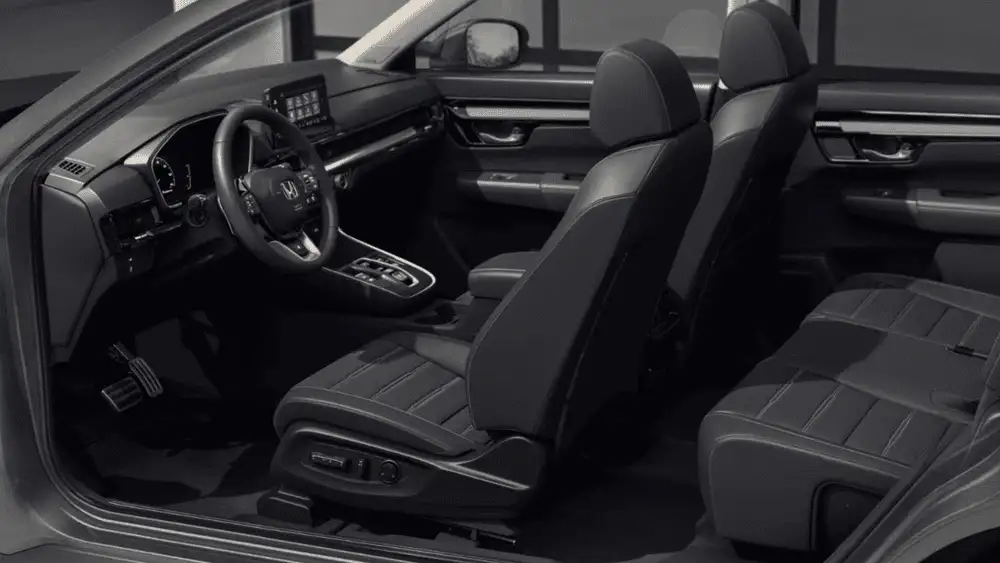
The 2026 Honda CR-V e:FCEV uses bio-synthetic leather-trimmed seating surfaces throughout the cabin. Front seating includes heating functionality for both driver and passenger seats. The steering wheel also includes heating capability and synthetic leather wrapping.
The driver’s seat includes 10-way power adjustment with power lumbar support and two-position memory settings. The front passenger seat uses a 4-way power adjustment system. Additional interior materials include honeycomb trim detailing and sport pedals.
Climate management functions include dual-zone automatic climate control with a humidity sensor and an air-filtration system. Remote climate pre-conditioning allows cabin temperature adjustment before entering the vehicle.
Convenience equipment includes push-button start, automatic-dimming rearview mirror, sliding sunvisors, illuminated vanity mirrors, LED front and rear map lights, ambient front foot and door handle lighting, power windows with automatic up and down operation for all windows, and a sunglass holder.
The electronic gear selector integrates with the shift-by-wire transmission system. Smart Entry with Walk Away Auto Lock® functionality provides automatic locking capability after exiting the vehicle.
Honda Sensing® and Safety Technology Systems
Honda installs the full Honda Sensing® suite in the 2026 Honda CR-V e:FCEV. Driver-assistance systems include Collision Mitigation Braking System™, Road Departure Mitigation System, Lane Departure Warning, Forward Collision Warning, Adaptive Cruise Control with Low-Speed Follow, Lane Keeping Assist System, and Traffic Sign Recognition.
Additional monitoring systems include Blind Spot Information, Cross Traffic Monitor, Traffic Jam Assist, Low Speed Braking Control, Auto High Beam headlights, and parking sensors with four front and four rear sensors.
The safety structure also includes driver and passenger i-SRS airbags, front and rear i-side airbags, side curtain airbags, and driver and passenger knee airbags. Vehicle Stability Assist™ with traction control contributes additional directional control support during low-traction conditions.
Anti-Lock Braking System and Electronic Brake Distribution remain standard across the braking system. Tire Pressure Monitoring System functionality continuously monitors tire inflation status. Driver Attention Monitor tracks driver behavior patterns to identify signs of reduced attentiveness.
The rearview camera includes dynamic guidelines for reversing assistance. Combined with parking sensors and blind spot monitoring systems, the technology package supports visibility and maneuvering assistance in confined driving areas.
Schedule a Test Ride Today
Drivers interested in advanced hydrogen fuel-cell technology can explore the 2026 Honda CR-V e:FCEV at Huntington Honda near Commack, NY. A test drive allows visitors to experience the direct-drive electric motor response, EV Mode operation, and hydrogen fuel-cell performance under normal driving conditions. Customers can also examine the 10.2-inch digital instrument display, Bose® 12-speaker audio system, Honda Sensing® technologies, and dual-zone climate control system during their visit. The cabin layout, cargo flexibility, and connectivity systems can be reviewed in detail while evaluating overall passenger space and driving comfort. Our team can also provide additional information regarding charging capability, fuel-cell operation, and the integrated safety technologies included in the vehicle. Contact our team today to schedule a test drive!