


2025 Honda Pilot near Hauppauge, NY
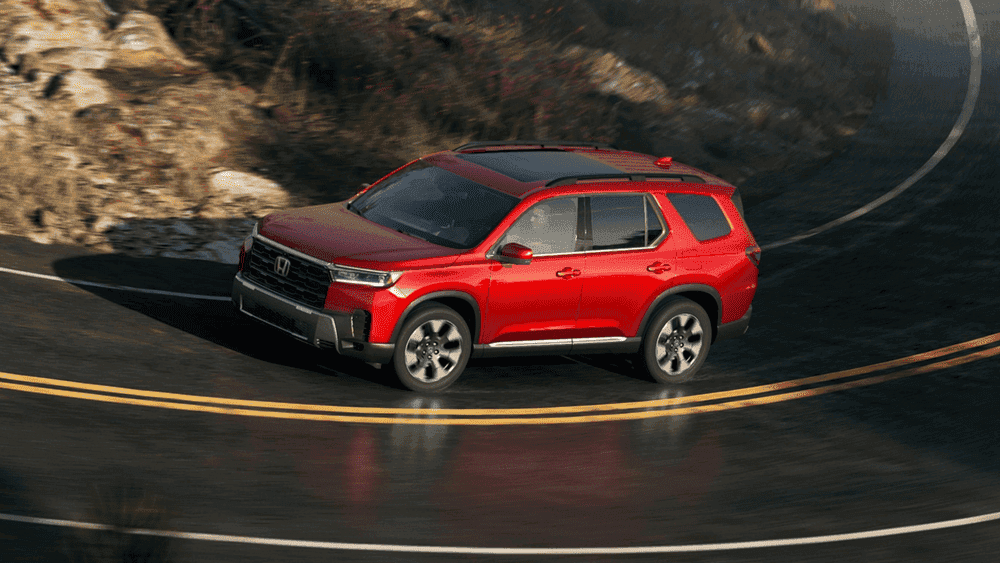
The 2026 Honda Pilot is a three-row SUV built around a 3.5-liter V6 engine, a 10-speed automatic transmission, and a configurable drivetrain lineup. Six trim levels are available, including Sport, EX-L, TrailSport, Touring, Elite, and Black Edition. Each version combines unit-body construction with independent front and rear suspension systems, four-wheel disc brakes, electric power-assisted steering, and multiple integrated drive modes. The model also includes a 12.3-inch touchscreen, a 10.2-inch digital instrument cluster, wireless smartphone integration, and a broad collection of Honda Sensing® technologies.
V6 Power and Transmission Engineering
Every 2026 Honda Pilot uses the same naturally aspirated V6 engine and 10-speed automatic transmission configuration. Honda carries the main engine specifications across the Sport, EX-L, TrailSport, Touring, Elite, and Black Edition trims. The power unit incorporates systems that manage combustion, cylinder operation, engine vibration, ignition, and fuel-saving functions. This consistent mechanical foundation allows drivetrain hardware, chassis tuning, tires, seating arrangements, and convenience equipment to distinguish each trim. Regular unleaded fuel is recommended throughout the lineup.
Engine Output and Mechanical Specifications
The 3,471-cc V6 engine produces 285 horsepower at 6,100 rpm and 262 pound-feet of torque at 5,000 rpm. Its operating specifications include a 6,500-rpm redline, a 89-millimeter bore, and a 93-millimeter stroke. The engine uses a 24-valve dual-overhead-camshaft valvetrain with Dual Variable Timing Control. An 11.5:1 compression ratio and direct fuel injection support the engine’s combustion process. The power unit also carries a CARB LEV4-SULEV30 emissions rating.
Honda equips the V6 with Variable Cylinder Management™, which can alter cylinder operation according to driving demand. The Eco Assist™ System provides an additional efficiency-focused operating function. Idle-Stop can shut down the engine during qualifying stops and restart it when the vehicle prepares to move. An Active Control Engine Mount System helps manage engine movement and vibration before they reach the passenger compartment. Active Noise Cancellation™ addresses selected frequencies within the cabin, while the direct ignition system incorporates an immobilizer.
Ten-Speed Automatic Transmission
The standard 10-speed automatic transmission uses shift-by-wire controls rather than a conventional mechanical shift linkage. Paddle shifters mounted on the steering wheel allow the driver to request gear changes while retaining the transmission’s automatic operating capability. The transmission uses a 5.246 first-gear ratio, followed by ratios of 3.271 in second, 2.185 in third, 1.597 in fourth, and 1.304 in fifth. Sixth gear uses a direct 1.000 ratio, while seventh through tenth use 0.782, 0.653, 0.581, and 0.517 ratios. A 3.974 reverse ratio and a 4.167 final-drive ratio complete the transmission specifications.
The wide range of gear ratios supports several operating requirements within one transmission design. The lower ratios assist initial acceleration and low-speed operation, while the upper overdrive ratios support sustained driving. Paddle shifters provide additional driver control without changing the transmission’s fundamental automatic design. Every trim receives the same number of forward gears and the same shift-by-wire arrangement. The transmission also works with the 2026 Honda Pilot’s integrated drive modes, Tow mode, and available All-Wheel Drive system.
Drivetrain Configurations and Drive Modes
The 2026 Honda Pilot offers Front-Wheel Drive on the Sport and EX-L trims, while All-Wheel Drive remains available on both versions. TrailSport, Touring, Elite, and Black Edition models include second-generation Intelligent Variable Torque Management™ All-Wheel Drive as standard equipment. Drive-mode availability changes according to trim and drivetrain configuration. The lineup includes modes intended for routine driving, efficiency, sport-oriented response, winter conditions, towing, and selected loose-surface conditions. Every 2026 Honda Pilot also uses an 18.5-gallon fuel tank.
Intelligent Variable Torque Management All-Wheel Drive
The second-generation i-VTM4™ AWD system is available on Sport and EX-L and standard on TrailSport, Touring, Elite, and Black Edition. TrailSport adds Trail Torque Logic as model-specific drivetrain equipment. This feature forms part of the trim’s functional hardware package rather than serving as an appearance treatment. The AWD system also enables additional drive modes on selected models.
Sport includes Normal, Econ, Sport, Snow, and Tow modes. EX-L provides the same primary modes and adds Trail and Sand settings when equipped with AWD. TrailSport, Touring, Elite, and Black Edition include Normal, Econ, Sport, Snow, Tow, Trail, and Sand modes. These settings allow the vehicle’s control systems to respond to different operating conditions and driver inputs. Tow mode also complements the 2026 Honda Pilot’s rated trailering capability when the vehicle carries the required towing equipment.
Fuel Economy Ratings
Front-Wheel Drive 2026 Honda Pilot models carry EPA ratings of 19 mpg city, 27 mpg highway, and 22 mpg combined. Non-TrailSport AWD models are rated at 19 mpg city, 25 mpg highway, and 21 mpg combined. TrailSport carries ratings of 18 mpg city, 23 mpg highway, and 20 mpg combined. These figures reflect differences in drivetrain configuration, tires, chassis equipment, and trim specifications. Actual fuel consumption can vary with driving habits, maintenance, traffic, weather, road conditions, and vehicle load.
The 18.5-gallon fuel tank remains consistent across the six-trim lineup. Regular unleaded fuel is recommended for each version. The shared tank capacity simplifies comparison among Front-Wheel Drive, standard AWD, and TrailSport configurations. The ratings also show that the main variation occurs between 2WD, non-TrailSport AWD, and TrailSport models.
Chassis, Steering, Suspension, and Braking
The 2026 Honda Pilot uses unit-body construction throughout the lineup. Its chassis combines MacPherson® strut front suspension with a multi-link rear suspension on every trim. Electric power-assisted rack-and-pinion steering provides steering assistance without a conventional hydraulic pump. Stabilizer-bar dimensions and steering ratios vary on selected versions to support different wheel, tire, and ground-clearance specifications. Four-wheel disc brakes provide the same basic braking layout across all models.
Suspension and Steering Specifications
The steering system requires 3.13 turns from lock to lock on every trim. Sport, EX-L, Touring, Elite, and Black Edition use a 15.9 steering ratio, while TrailSport uses a 15.7 ratio. The curb-to-curb turning diameter measures 37.8 feet on most models and 37.7 feet on TrailSport. These measurements remain closely grouped despite TrailSport’s different tire dimensions and increased ride height. Electric power assistance supports low-speed maneuvering and steering response throughout the operating range.
Sport and EX-L use a 25.0-by-4.5-millimeter tubular front stabilizer bar and a 25.4-by-4.5-millimeter tubular rear stabilizer bar. TrailSport uses a 24.2-by-4.5-millimeter tubular front bar and an 18.0-millimeter solid rear bar. Touring, Elite, and Black Edition use a 25.7-millimeter solid front bar and an 18.0-millimeter solid rear bar. These differences give Honda the ability to match chassis hardware with each trim’s wheels, tires, ride height, and intended equipment package.
Braking and Stability Systems
Every 2026 Honda Pilot uses power-assisted ventilated front disc brakes and solid rear disc brakes. The front discs measure 13.8 inches, while the rear discs measure 13.0 inches. Anti-lock braking, Electronic Brake Distribution, Brake Assist, and an electronic parking brake supplement the mechanical brake components. Hill Start Assist helps manage movement when starting on an incline. Hill Descent Control supports controlled low-speed operation on descending grades.
Vehicle Stability Assist™ with traction control works with the braking and drivetrain systems to support directional control. The system can assist under qualifying conditions, but it cannot correct every loss-of-control event. Steering, braking, road conditions, and driver inputs continue to determine overall vehicle behavior. The standard braking technologies provide coordinated support rather than replacing attentive operation. Honda applies this braking and stability package to every trim, including both Front-Wheel Drive and AWD configurations.
Wheels, Tires, and Spare Equipment
Sport uses 20-inch Shark Gray wheels with 255/50 R20 all-season tires. EX-L receives 18-inch Pewter Gray machined-face wheels with 255/60 R18 all-season tires. TrailSport combines 18-inch Shark Gray wheels with 265/60 R18 rugged-terrain tires. Touring and Elite use 20-inch Shark Gray machined-face wheels with 255/50 R20 all-season tires. Black Edition completes the lineup with 20-inch gloss-black wheels and the same 255/50 R20 tire dimensions.
TrailSport includes a full-size spare tire that corresponds with its specialized wheel and tire package. Sport, EX-L, Touring, Elite, and Black Edition use compact spare tires. Black lug nuts appear on Sport, TrailSport, and Black Edition. Tire choice also contributes to the differences in fuel ratings, ground clearance, and intended operating use among the trims.
Exterior Dimensions, Ground Clearance, and Towing
The 2026 Honda Pilot measures approximately 200 inches long and uses a 113.8-inch wheelbase across the lineup. Most trims share the same width, overall length, ground clearance, and basic exterior proportions. TrailSport differs in length, height, track width, ground clearance, and approach and departure geometry. These dimensional changes accompany its rugged-terrain tires, underbody protection, recovery points, and standard AWD system. Towing capacity also changes according to drivetrain rather than seating or infotainment equipment.
Exterior Measurements
Sport, EX-L, Touring, Elite, and Black Edition measure 200.1 inches long. TrailSport measures 200.4 inches, primarily reflecting its trim-specific exterior configuration. Every model measures 78.5 inches wide and rides on a 113.8-inch wheelbase. Sport, Touring, Elite, and Black Edition stand 71.0 inches high, while EX-L measures 70.9 inches. TrailSport reaches 72.0 inches in height.
Standard models provide 7.3 inches of unladen ground clearance. TrailSport increases unladen clearance to 8.3 inches. Most AWD versions use an 18.3-degree approach angle, while TrailSport increases that measurement to 19.9 degrees. TrailSport has a 19.0-degree departure angle, compared with 20.3 degrees on EX-L, Touring, Elite, and Black Edition. Sport uses a 21.1-degree departure angle, while all trims share a 40.1-inch front overhang.
Weight and Towing Capacity
Curb weight varies according to drivetrain and trim equipment. Sport weighs 4,336 pounds with Front-Wheel Drive and 4,513 pounds with AWD. EX-L weighs 4,334 pounds with Front-Wheel Drive and 4,528 pounds with AWD. TrailSport weighs 4,722 pounds, Touring weighs 4,658 pounds, and Elite and Black Edition weigh 4,678 pounds. Weight distribution also changes slightly among the drivetrain and trim configurations.
Front-Wheel Drive 2026 Honda Pilot models have a maximum towing capacity of 3,500 pounds when properly equipped. AWD versions increase maximum towing capacity to 5,000 pounds with the required accessory towing equipment. TrailSport includes a standard trailer hitch receiver with a rear recovery point, but it does not include a connector or hitch ball. The trim also receives underbody skid plates with an integrated front recovery point.
Passenger Space and Cargo Utility
The 2026 Honda Pilot provides three seating rows and a cabin designed to accommodate either seven or eight occupants, depending on trim. Most versions use an eight-passenger layout, while TrailSport uses second-row captain’s chairs and seats seven. Passenger dimensions remain consistent across much of the lineup, although total passenger volume varies by trim. Flat-folding rear seats support several combinations of passengers and cargo. Cargo measurements also account for different seat positions and available floor space.
Interior Dimensions
First-row legroom measures 41.0 inches, while second-row legroom measures 40.8 inches. Third-row legroom measures 32.5 inches. Shoulder room measures 61.9 inches in the first row, 61.7 inches in the second row, and 59.5 inches in the third row. Hiproom measures 58.4 inches in front, 57.4 inches in the second row, and 44.6 inches in the third row. These dimensions apply across the trim range.
Sport and EX-L provide 158.4 cubic feet of EPA passenger volume. TrailSport, Touring, Elite, and Black Edition provide 154.9 cubic feet. First-row headroom measures 40.5 inches on Sport and EX-L and 39.1 inches on trims equipped with the panoramic moonroof. Second-row headroom measures 40.2 inches on Sport and EX-L and 39.2 inches on TrailSport, Touring, Elite, and Black Edition. Third-row headroom remains 39.3 inches on every model.
Cargo Capacity
Standard cargo volume behind the third row measures 18.6 cubic feet on every trim. Maximum volume behind the third row ranges from 21.8 to 22.4 cubic feet, depending on configuration. Standard volume behind the second row measures 48.5 cubic feet across the lineup. Maximum second-row cargo measurements range from 59.5 to 60.1 cubic feet. These differences reflect trim equipment and available floor space rather than a change in the main body structure.
Standard cargo volume behind the first row measures 87.0 cubic feet on Sport, EX-L, TrailSport, and Touring. The Elite and Black Edition provide 86.5 cubic feet in the same standard configuration. Maximum capacity reaches 111.8 cubic feet in Sport, 112.4 cubic feet in EX-L, Touring, and Black Edition, 113.7 cubic feet in TrailSport, and 112.1 cubic feet in Elite. A 60/40 split flat-folding third-row bench is standard across the range. Cargo-area bag hooks and four tie-down anchors help organize and secure smaller items.
Seating, Comfort, and Cabin Flexibility
The 2026 Honda Pilot cabin combines three-row seating with trim-specific upholstery, power adjustments, heating, ventilation, storage, and second-row configurations. Every model includes heated front seats, a power-adjustable driver’s seat, and a power-adjustable front-passenger seat. Upper trims add memory settings, ventilated seats, heated second-row seating, and upgraded materials. The rear seating systems also provide one-touch folding functions for easier access and cargo conversion. Climate-control equipment remains consistent across the lineup.
Seating Materials and Front-Seat Features
EX-L uses leather-trimmed seats with fabric accents. TrailSport receives durable synthetic leather upholstery with orange stitching. Touring includes leather-trimmed seating, while Elite and Black Edition use perforated leather-trimmed seats with quilted Ultrasuede® accents and contrast piping. Heated front seats are standard on all six trims. The Elite and Black Edition add ventilated front seats.
The driver’s seat includes 10-way power adjustment with two-way power lumbar support on every model. The front passenger receives four-way power adjustment throughout the range. EX-L, TrailSport, Touring, Elite, and Black Edition add two-position memory for the driver’s seat and side mirrors. Adjustable front seat-belt anchors are standard. Driver and front-passenger seatback pockets provide additional storage for rear occupants.
Second- and Third-Row Configurations
Sport, EX-L, Touring, Elite, and Black Edition use a 40/20/40 split flat-folding second-row seat. TrailSport replaces that bench with two second-row captain’s chairs. One-touch flat-folding operation remains standard for the second row across the lineup. EX-L, Touring, Elite, and Black Edition include a multifunction second row with a removable middle seat. Those trims also provide on-demand in-trunk storage for the removable section.
TrailSport, Elite, and Black Edition include heated outboard second-row seats. Every 2026 Honda Pilot uses a 60/40 split flat-folding third-row bench. Head restraints are installed at all seating positions. Integrated rear-door sunshades appear on EX-L and higher trims. A conversation mirror is also included on EX-L, TrailSport, Touring, Elite, and Black Edition.
Climate Control and Interior Convenience
Tri-zone automatic climate control with humidity control, air filtration, and rear-seat heater ducts is standard. Every model also includes a leather-wrapped steering wheel, a tilt-and-telescopic steering column, sliding sunvisors, and a timed rear-window defroster. TrailSport, Elite, and Black Edition add a heated steering wheel. EX-L and higher trims receive an automatic-dimming rearview mirror. The Elite and Black Edition add a head-up display.
Push-button start and key-fob-activated remote engine start are standard across the lineup. Power windows include automatic up and down operation for all four side windows. Power door and tailgate locks, one-touch turn indicators, and illuminated steering-wheel-mounted controls are also standard. TrailSport, Touring, Elite, and Black Edition include the HomeLink® remote system. A capless fuel filler simplifies routine refueling access.
Cabin Storage and Lighting
A multifunction center console and lockable glove compartment are standard in every 2026 Honda Pilot. Additional storage includes a sunglasses holder, garment hooks, seatback pockets, and multiple beverage holders across all three rows. Sport, EX-L, Touring, Elite, and Black Edition provide four front-row, six second-row, and four third-row beverage holders. TrailSport provides four beverage holders in each row. These storage provisions distribute smaller-item capacity throughout the passenger compartment.
LED map lights serve all seating rows, while an LED cargo light illuminates the rear storage area. Interior ambient LED lighting is standard on every trim. Touring, Elite, and Black Edition add illuminated front-console beverage holders and front-row courtesy door lights. Driver and front-passenger illuminated vanity mirrors appear on EX-L and higher models. Floor-mat coverage varies by trim, with selected versions providing all-row, all-season mats.
Displays, Audio, and Connectivity
Honda equips every 2026 Honda Pilot with a common digital interface centered on two large displays. Wireless smartphone compatibility, connected services, USB-C ports, and an in-cabin communication system are also standard. Audio hardware changes between the first three trims and the upper three models. Additional power outlets and charging functions appear as trim levels progress.
Digital Displays and Connected Features
A 10.2-inch digital instrument cluster is standard on every trim. The center interface uses a 12.3-inch color touchscreen throughout the lineup. Google built-in is also standard and includes a three-year unlimited data plan for supported in-vehicle applications. Network demand can affect data speed. HondaLink® and HondaLink® Subscription Services provide additional connected functions, subject to enrollment and service requirements.
Wireless Apple CarPlay® and wireless Android Auto™ compatibility allow supported smartphone integration without a physical data cable. Every trim also provides Wi-Fi hotspot capability. HD Radio™, Radio Data System, and Speed-Sensitive Volume Compensation are standard. CabinTalk® functions as an in-car public-address system that helps front occupants communicate with passengers in the rear rows. Touring, Elite, and Black Edition add Multi-Zone Audio.
Audio Systems and Power Access
Sport, EX-L, and TrailSport use a 245-watt audio system with nine speakers, including a subwoofer. Touring, Elite, and Black Edition receive a Bose® premium audio system with 12 speakers, including a subwoofer. A front 12-volt power outlet is standard on every trim. EX-L and higher models add a 12-volt outlet in the cargo area. TrailSport, Elite, and Black Edition also provide a 115-volt power outlet in the second row.
A USB-C smartphone and audio interface are located in the front console. A separate USB-C charging port also serves the front console. Two additional USB-C charging ports are provided in the second row on every trim. EX-L and higher models add two USB-C charging ports for the third row. Wireless phone charging is included on EX-L, TrailSport, Touring, Elite, and Black Edition and supports compatible Qi or Powermat devices.
Honda Sensing® and Occupant Protection
The 2026 Honda Pilot combines Honda Sensing® driver-assistance technology with structural engineering, airbags, restraint systems, cameras, and electronic braking controls. Most assistance features are standard throughout the lineup, while selected low-speed and parking functions begin with EX-L. TrailSport and higher trims receive additional camera equipment. These systems can support the driver, but operating conditions can affect their performance.
Driver-Assistance Technologies
Standard Honda Sensing® equipment includes the Collision Mitigation Braking System™, Road Departure Mitigation System, Forward Collision Warning, and Lane Departure Warning. Lane Keeping Assist System and Traffic Jam Assist can provide steering support when qualifying lane markings are detected. Adaptive Cruise Control with Low-Speed Follow can assist with speed and following-distance management. Traffic Sign Recognition identifies and displays selected road-sign information. Auto high-beam headlights and a Driver Attention Monitor are also standard.
Blind Spot Information System and Cross Traffic Monitor appear on every trim. EX-L and higher models add Low Speed Braking Control and eight parking sensors, with four at the front and four at the rear. A rearview camera with dynamic guidelines and a rearview camera washer are standard across the lineup. TrailSport, Touring, Elite, and Black Edition add a multiview camera system, front camera washer, and TrailWatch™. Camera and sensor coverage can vary with weather, object size, vehicle speed, visibility, and surface conditions.
Body Structure and Airbag Systems
The Advanced Compatibility Engineering™ body structure is standard on every 2026 Honda Pilot. The airbag system includes advanced front airbags, SmartVent® front side airbags, three-row side-curtain airbags with a rollover sensor, and front knee airbags. Three-point seat belts are installed at every seating position. Front-row and outer second-row belts include an automatic tensioning system. Seat-belt reminders monitor all seating positions, and a Rear Seat Reminder is also standard.
Lower Anchors and Tethers for Children are distributed across the second and third rows. Lower anchors serve all second-row positions and the passenger-side third-row position. Tether anchors are included for every second-row and third-row seating position. Child-proof rear-door locks add another passenger-protection function. A Post-Collision Braking System can activate after qualifying airbag or seat-belt pretensioner deployment, although crash severity, vehicle damage, and collision dynamics can affect operation.
Tire and Brake Monitoring Functions
The Tire Pressure Monitoring System includes Tire Fill Assist plus individual tire location and pressure indicators. The system supplies useful pressure information, but does not replace regular manual checks with an appropriate gauge. Tire condition and inflation affect handling, braking, wear, and fuel use. Electronic Brake Distribution and Brake Assist support the four-wheel disc brake system during qualifying conditions. Anti-lock braking helps maintain wheel rotation during hard braking events.
Vehicle Stability Assist™ with traction control works with the braking system to support vehicle stability. Hill Start Assist helps reduce rollback when beginning to move on an incline. Hill Descent Control supports controlled operation on descending surfaces. The electronic parking brake replaces a conventional manually operated parking-brake lever or pedal. These systems operate together as driver-support technologies rather than autonomous control features.
Exterior Lighting and Functional Equipment
The 2026 Honda Pilot combines standard LED lighting, acoustic glass, roof rails, power mirrors, and a power lift tailgate with trim-specific convenience features. All trims include rear privacy glass, a fin-type roof-mounted antenna, a security system, and programmable remote entry. Upper models expand acoustic-glass coverage and add hands-free cargo access. TrailSport receives underbody protection, recovery equipment, and trim-specific exterior details. Black Edition uses additional gloss-black components to create a distinct equipment package.
Lighting, Glass, and Wiper Equipment
LED headlights with automatic on and off operation are standard. LED daytime running lights, LED fog lights, and LED brake and taillights are also fitted to every trim. An acoustic-laminate windshield helps limit selected exterior noise entering the cabin. Touring, Elite, and Black Edition add acoustic-laminate front side glass. TrailSport, Elite, and Black Edition include a heated windshield.
Variable intermittent windshield wipers and an intermittent rear wiper and washer are standard throughout the lineup. The Elite and Black Edition add rain-sensing windshield wipers. Rear privacy glass appears on every model. TrailSport, Touring, Elite, and Black Edition include a panoramic moonroof with tilt and slide functions. A push-to-release fuel-filler door is also standard.
Tailgate, Entry, and Mirror Functions
Every 2026 Honda Pilot includes a power lift tailgate. Touring, Elite, and Black Edition add hands-free access and a walk-away closing function. Sport, EX-L, and TrailSport include Smart Entry with Walk Away Auto Lock® for the front doors and tailgate. Touring, Elite, and Black Edition extend that coverage to all doors and the tailgate. Power door and tailgate locks remain standard throughout the range.
Power side mirrors are standard on every model. EX-L and higher trims add heating, integrated LED turn signals, and reverse-gear tilt-down operation. TrailSport, Touring, Elite, and Black Edition include power-folding side mirrors. The Elite and Black Edition add auto-dimming mirror functions and puddle lights.
Trim-Specific Exterior Equipment
Gloss-black roof rails are standard on every trim. Touring and Elite add a gloss-black front grille and gloss-black rear roof-spoiler side sections. TrailSport uses gloss-black door handles, while Black Edition receives gloss-black mirror housings. Selected trims use dual chrome exhaust finishers, while Sport and Black Edition use dual gloss-black exhaust finishers. Wheel finishes also vary from Shark Gray and machined-face designs to Black Edition’s gloss-black wheels.
TrailSport includes underbody skid plates with an integrated front recovery point. It also receives a standard trailer hitch receiver with a rear recovery point. Its 18-inch wheels, rugged-terrain tires, 8.3 inches of ground clearance, and Trail Torque Logic further distinguish the trim’s functional configuration. The heated windshield and power-folding mirrors add convenience alongside the specialized chassis equipment.
Visit Huntington Honda for a Test Ride
Visit Huntington Honda near Hauppauge, NY, to examine the 2026 Honda Pilot’s V6 performance, 10-speed transmission, three-row seating, and configurable cargo space. Our team can explain the differences among Front-Wheel Drive, i-VTM4™ AWD, TrailSport equipment, wheel packages, seating arrangements, and available comfort features. A scheduled test drive provides an opportunity to evaluate acceleration, transmission response, steering, handling, ride quality, and the integrated drive modes. Drivers can also review the digital displays, connectivity systems, camera views, cabin controls, and Honda Sensing® technologies from the driver’s seat. Contact our team to arrange a test drive and select a 2026 Honda Pilot configuration that matches your performance, technology, comfort, utility, handling, and safety priorities.